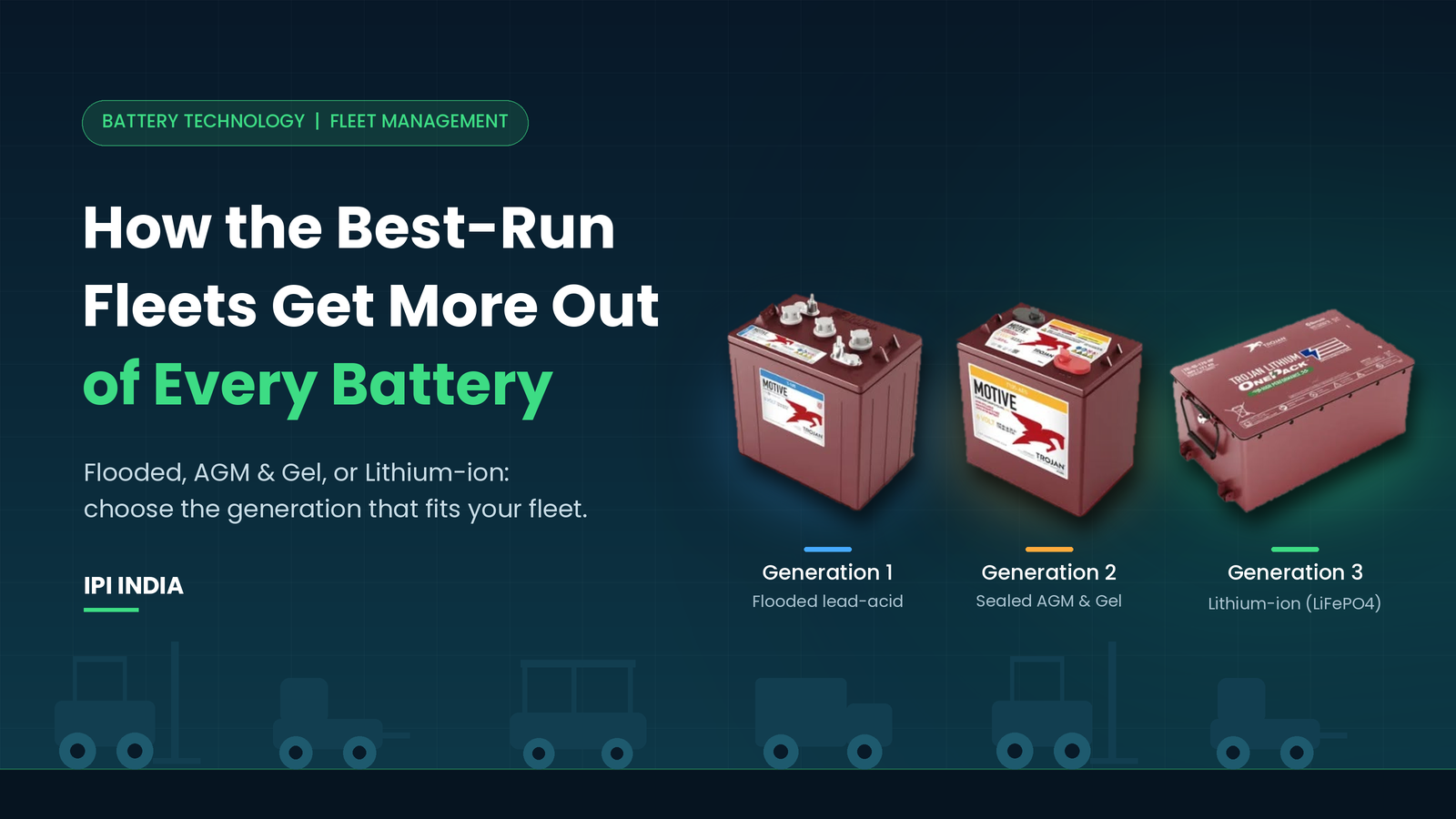
The best-run fleets in India are not choosing between a good battery and a bad one anymore. They are choosing between generations, and each generation makes life a little easier than the one before it: flooded lead-acid, sealed AGM and Gel, and lithium-ion all still have a place. The right one for your fleet comes down to what you value most, the lowest upfront cost, freedom from the watering can, or the lowest cost over the battery’s full working life. Here is what each generation actually delivers, so your fleet can choose deliberately instead of by habit.
Generation One: Flooded Lead-Acid Battery, Done Right
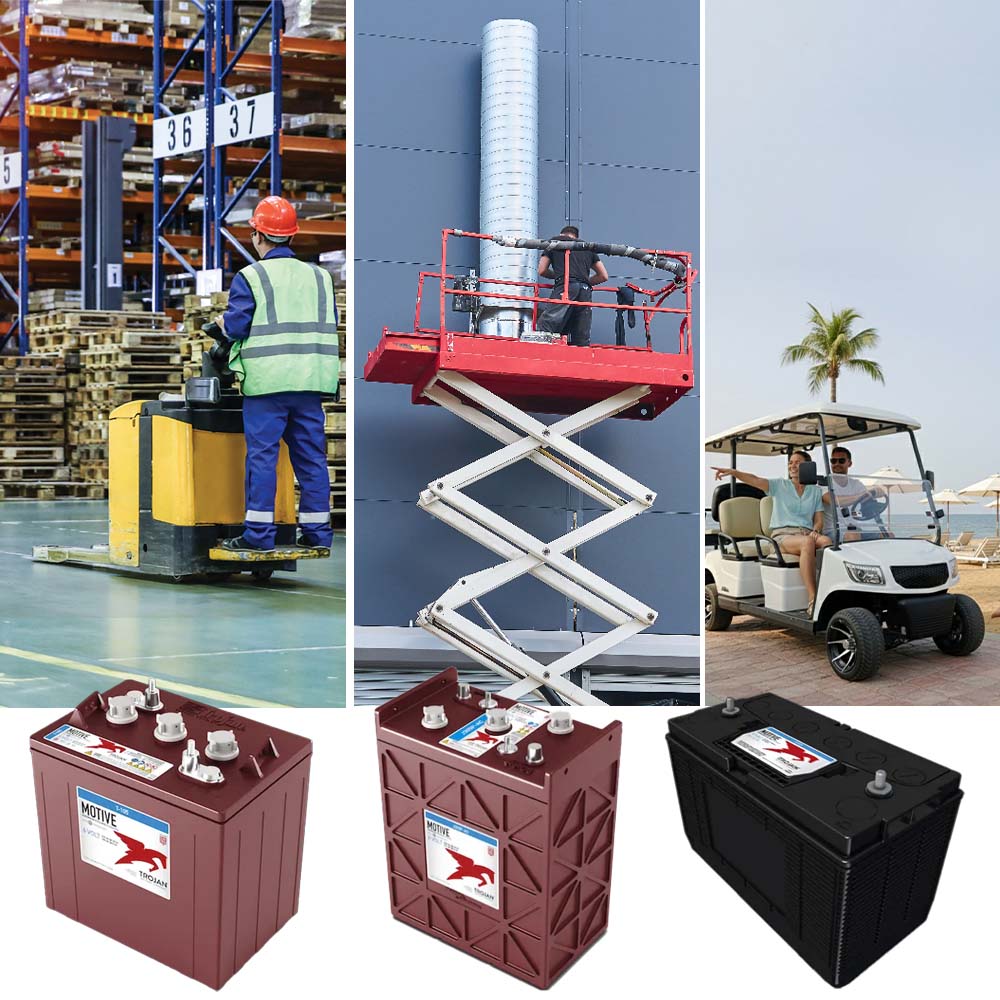
This is still the most common battery in Indian fleets, and a well-maintained one remains a perfectly sound choice at the lowest upfront cost of the three. The habits that make it work are simple and well known: distilled water topped up on schedule, never tap water. Terminals kept clean with a baking soda solution. Terminal nuts torqued to the correct spec. Protectant applied before corrosion gets a chance to start. An equalizing charge run whenever the readings call for it.
Done consistently, this is what earns a flooded battery its full 500 to 1,200 cycle life, roughly 2 to 4 years of dependable service. The full maintenance checklist is worth pinning up in the battery room. It is short, it is simple, and it works.
Generation Two: Sealed AGM Battery and Gel Battery, No Watering Required
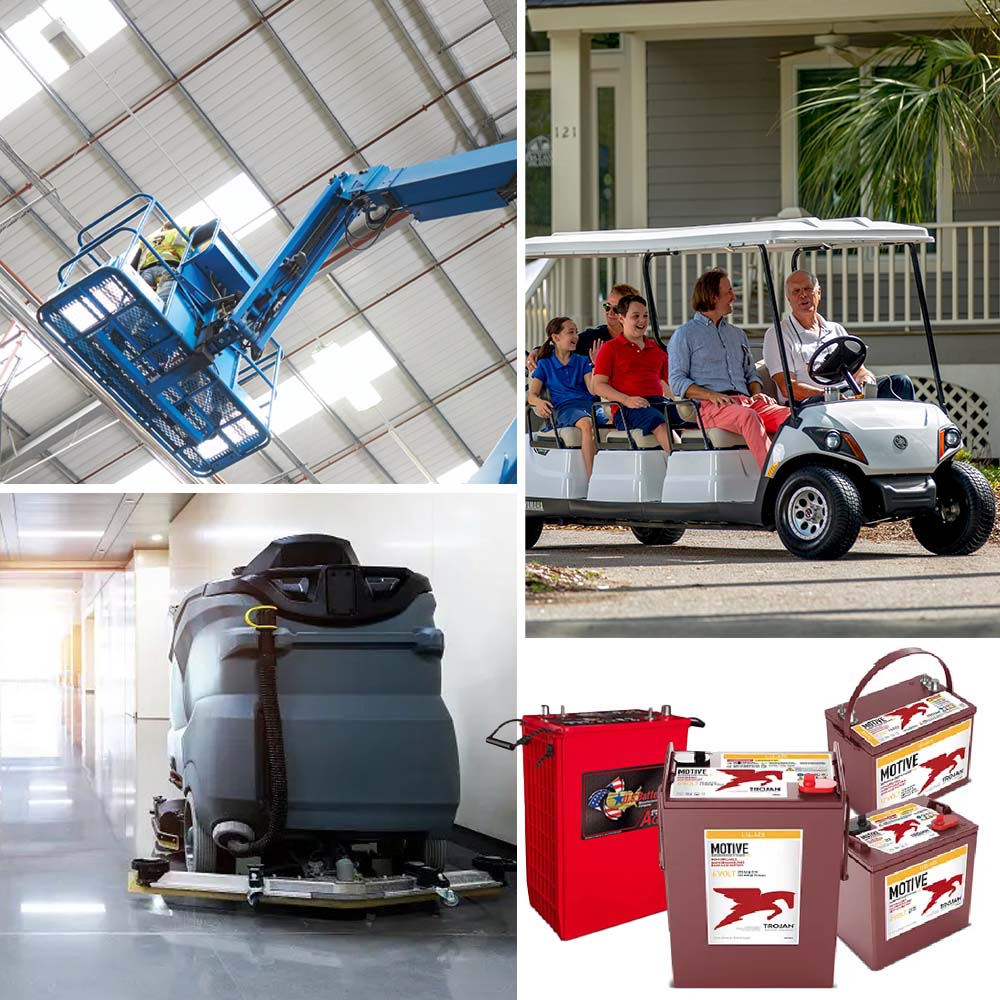
If the one thing you want to remove is the watering can, you do not have to jump straight to lithium to get there. Trojan‘s Reliant AGM and Gel batteries are sealed lead-acid: the same familiar chemistry your team already knows, with no distilled water top-ups, no acid checks, and far less sensitivity to the terminal corrosion a flooded battery picks up every monsoon. They cost more upfront than a flooded battery and less than lithium, which makes them a natural middle step for fleets, utility vehicles and transportation applications especially, that want the maintenance ritual gone without the bigger jump in price. The application-specific battery selection guide covers where AGM and Gel fit best, model by model.
Generation Three: Lithium-Ion Batteries (LiFePO4), the New Standard
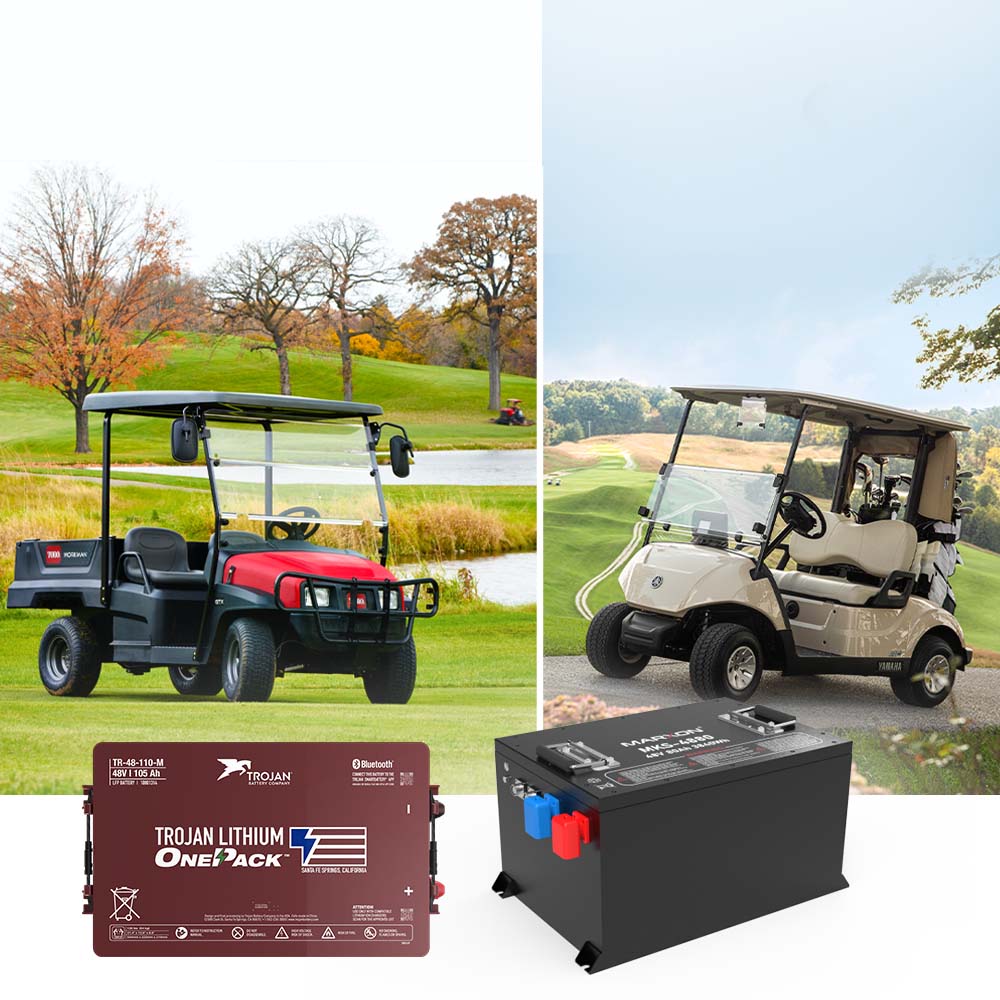
This is where the technology has moved fastest, and it shows in the numbers. A good LiFePO4 battery pack delivers 3,000 to 4,000 charge cycles, three to four times a flooded battery’s life, for a service life of 8 to 10 years. It charges in 2 to 3 hours instead of 6 to 8. It needs zero maintenance: no watering, no equalizing charge, no acid checks, because a built-in battery management system handles all of it automatically. It weighs roughly half as much, and unlike lead-acid, it delivers consistent power right up until it is almost empty, so the last hour of a shift feels exactly like the first.
Lithium costs two to three times more upfront than lead-acid, but between the longer life, the eliminated maintenance labour and the reduced downtime, it typically pays for itself within 2 to 3 years. We covered the full case, including the real cost-of-ownership numbers, in why everyone in the industry is quietly switching to lithium-ion batteries.
Which Generation Fits Your Fleet
- Want the lowest upfront cost and know the maintenance calendar will actually be followed: flooded lead-acid remains a sound choice.
- Want the watering can gone without the bigger jump in price: sealed AGM or Gel gets you there.
- Running multi-shift or high-utilisation equipment where uptime and total cost matter more than the sticker price: lithium-ion is now the standard the best fleets are moving to.
All three are good batteries. The best fleets simply pick the generation that matches what they actually need, rather than replacing like for like out of habit.
Talk to Our Battery Experts Today
Irrigation Products International (Pvt) Ltd.
4/112, East Coast Road, Neelankarai, Chennai 600 115
Contact: Mr. Balasundram, +91 93451 68408
Email: info@ipi-india.com | battery@ipi-india.com
Web: www.battery.ipi-india.com