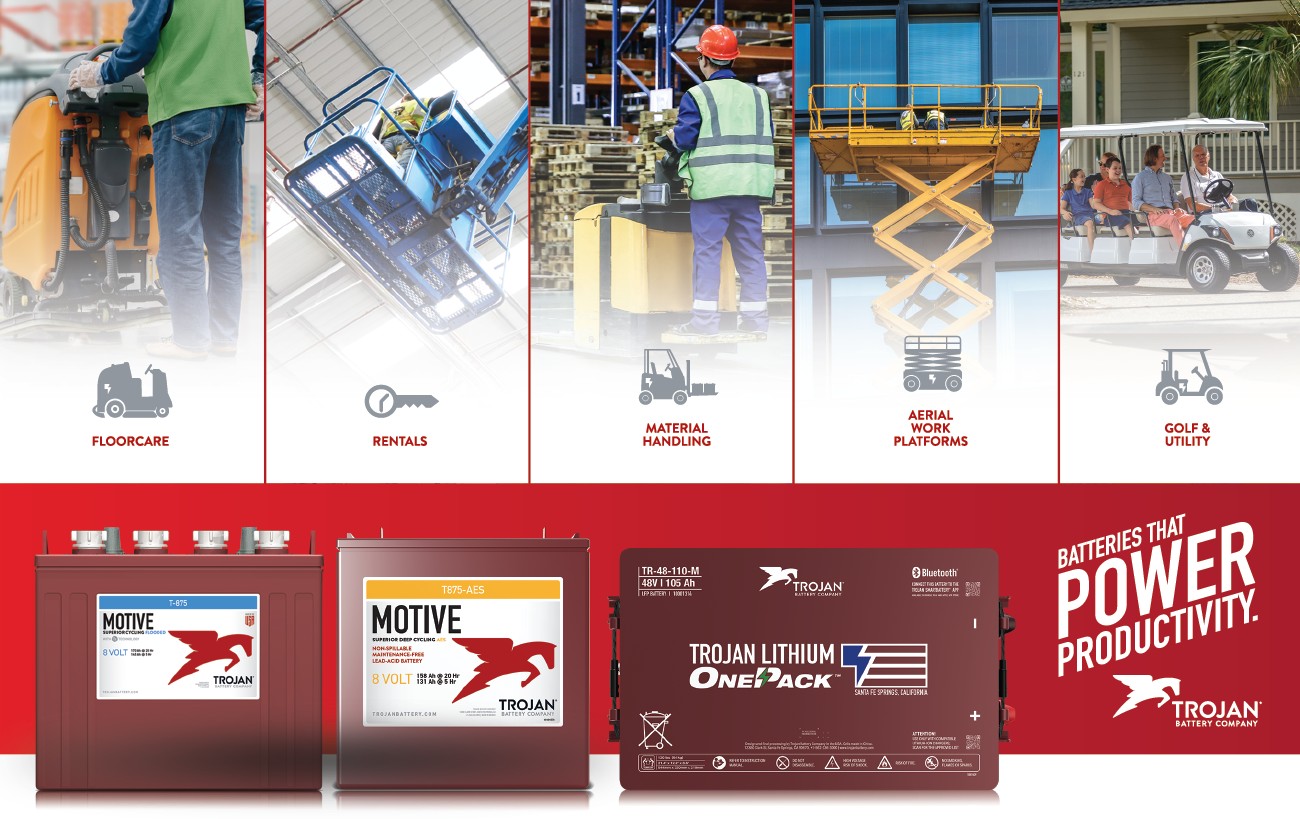
If you’ve walked through a modern golf course, warehouse, or shopping mall lately, you might have noticed something that wasn’t there a few years ago. It’s not what you can see. It’s what you can’t.
No battery rooms with that sharp, sour smell of acid in the air. No technicians topping up water cells with little plastic funnels. No mid-shift downtime while a forklift sits plugged into a wall for six hours.
That’s lithium quietly doing its job.
We’ve been in the power and equipment business at IPI India since 1993, and we’ve seen a lot of trends come and go. But the move from lead-acid to lithium-ion is different. This one isn’t hype. It’s already changing how serious operators run their fleets across India, and the gap between early adopters and everyone else is starting to widen.
So let’s talk about why.
The Honest Truth About Lead-Acid Batteries
For decades, lead-acid batteries were the only practical option. They worked. They still work. Plenty of fleets are still running on them, and there’s nothing inherently wrong with that.
But anyone who’s actually managed a lead-acid battery fleet knows the headaches. The watering. The acid spills. The corroded terminals every monsoon. The way performance fades as the battery drains, so by the end of a shift your forklift is crawling and your scrubber is barely scrubbing. The replacement cycle every two or three years. The battery room that takes up real estate you’d rather use for something else.
You learn to live with it because that’s just how it is. Or at least, that’s how it was.
What Changed with LiFePO4 Battery Technology
Lithium-ion batteries, specifically the LiFePO4 (Lithium Iron Phosphate) variety, have been around for a while. But the prices have come down, the technology has matured, and the case for switching has piled up to the point where the math just makes sense for most professional fleets.
Here’s what you actually get when you switch to a LiFePO4 battery.
Three to four times longer life. A good LiFePO4 battery pack will give you 3,000 to 4,000 charge cycles before it starts to noticeably lose capacity. Lead-acid typically taps out somewhere between 500 and 1,200 cycles, and that’s if you’re maintaining it well.
Charges in a third of the time. Two to three hours instead of six to eight. For single-shift operations, this is a minor convenience. For multi-shift fleets, this is the difference between needing a spare battery for every machine and just running one battery harder.
Zero maintenance. None. No watering, no equalization charges, no acid checks. The built-in Battery Management System (BMS) handles all the housekeeping automatically. You install it and you forget about it.
Roughly half the weight. Your equipment uses less energy moving the battery around, your tires last longer, and your machine accelerates better.
And here’s the one that surprises most operators: lithium delivers consistent power right up until it’s almost empty. Lead-acid sags as it drains. You feel it in the way the equipment behaves. With lithium, the last hour of the shift feels exactly like the first.
Where Lithium-Ion Batteries Are Making the Biggest Impact
Lithium Batteries for Golf Carts and Resort Vehicles
This is probably where the switch is most visible. Golf clubs, hotels, airports, large factory campuses, and educational institutions across India are converting their cart fleets to lithium at a steady pace.
The reasons make sense once you’ve experienced it. The cart goes further on a charge. It doesn’t slow down as the battery drains. You don’t need a dedicated charging room with ventilation. And over five to seven years, you spend significantly less than you would on three rounds of lead-acid replacements.
Our most popular lithium golf cart batteries for this segment are:
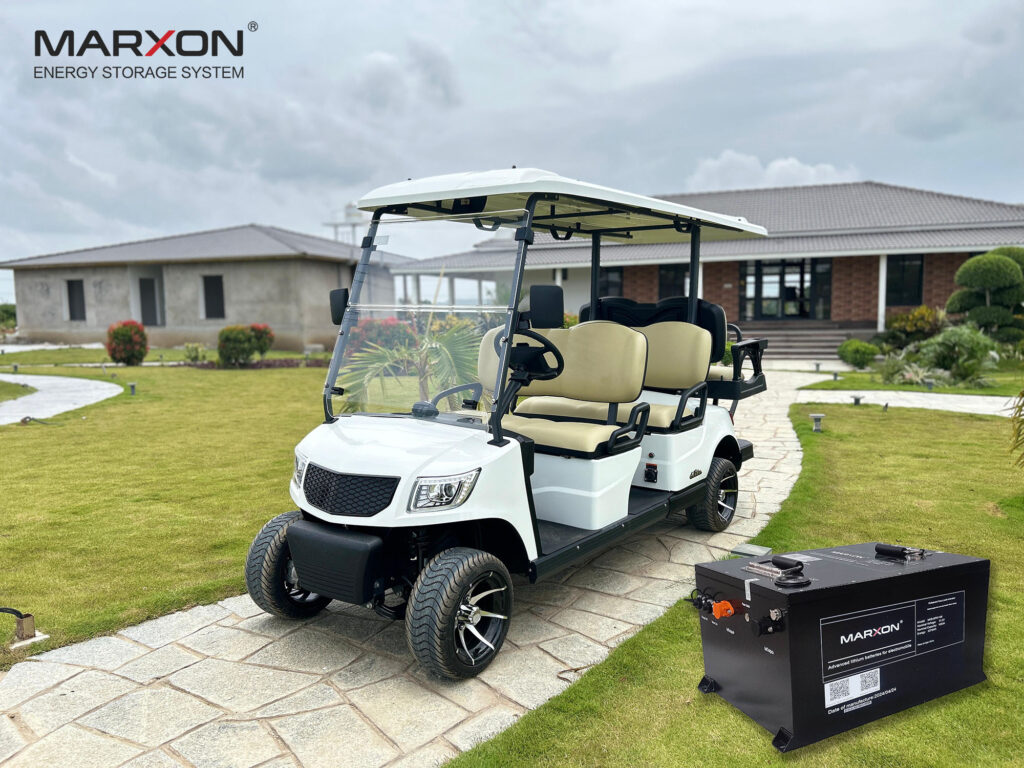
- Marxon MKS-GP51105 (51V, 105 Ah) for extended range applications
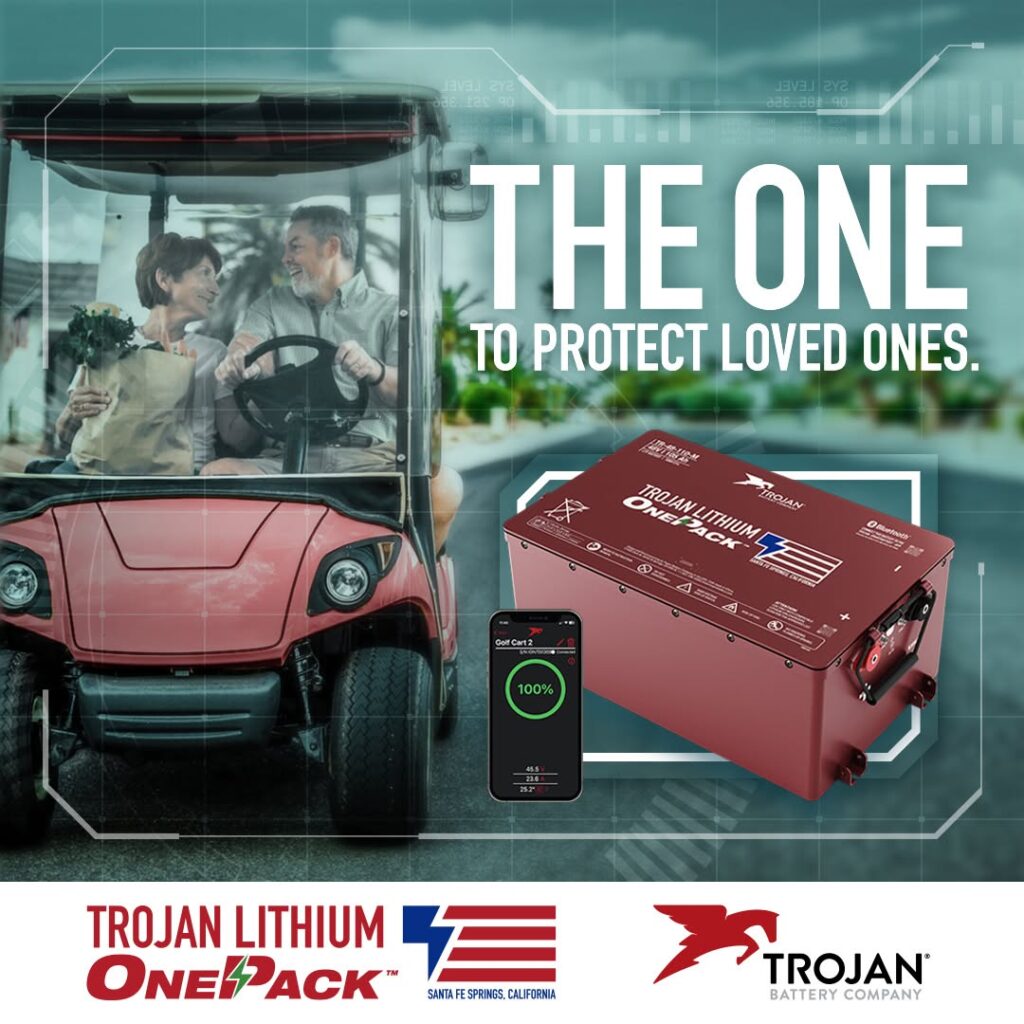
- Trojan OnePack 48V (105 Ah) with its excellent Bluetooth SmartBattery App for fleet monitoring
- OnePack High Performance HP 48V 171Ah Lithium Battery Pack
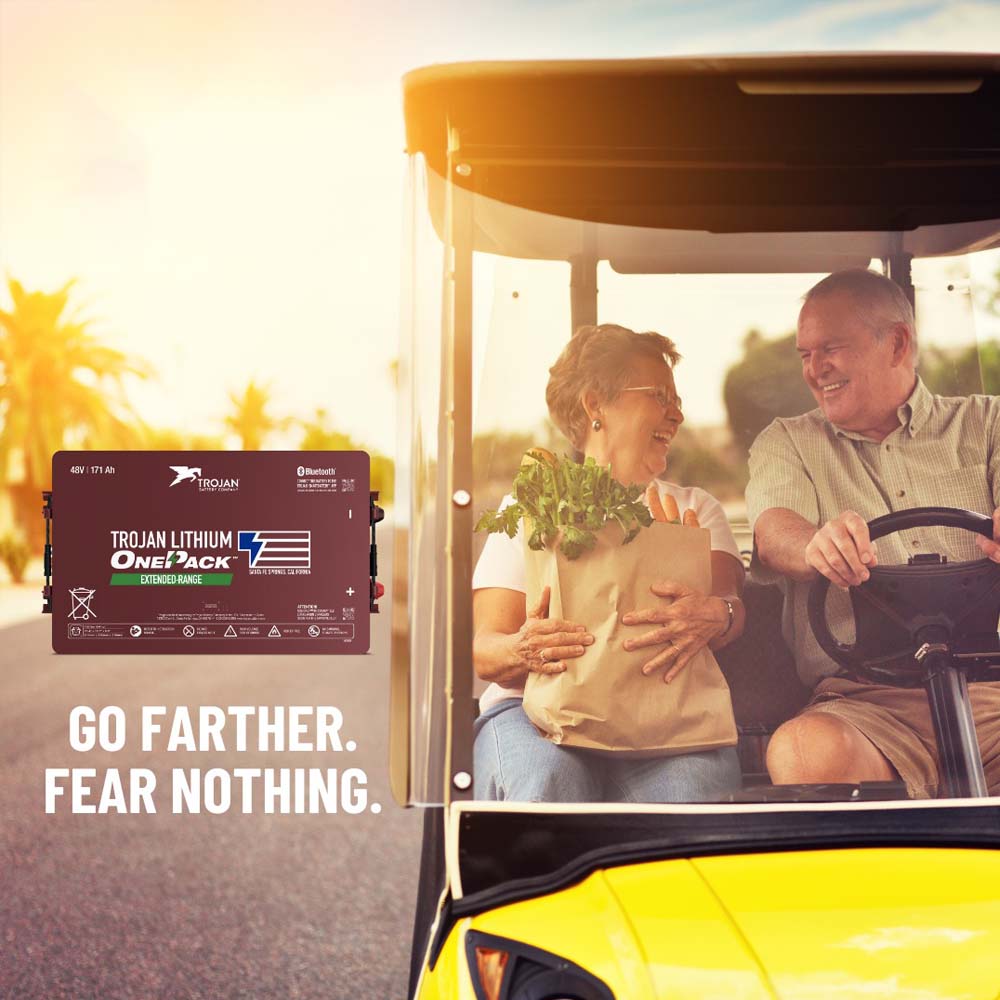
- OnePack Extended Range XR 48V 171Ah Lithium Battery Pack
- OnePack 72V 105Ah Lithium Battery Pack
- OnePack 36V 105Ah Lithium Battery Pack
Lithium Batteries for Aerial Work Platforms & Scissor Lifts
Rental fleets, in particular, are loving lithium for AWPs. The maintenance savings alone are enormous when you’re managing dozens of lifts across multiple sites. But the bigger wins are the faster turnaround between rentals and the longer service life.
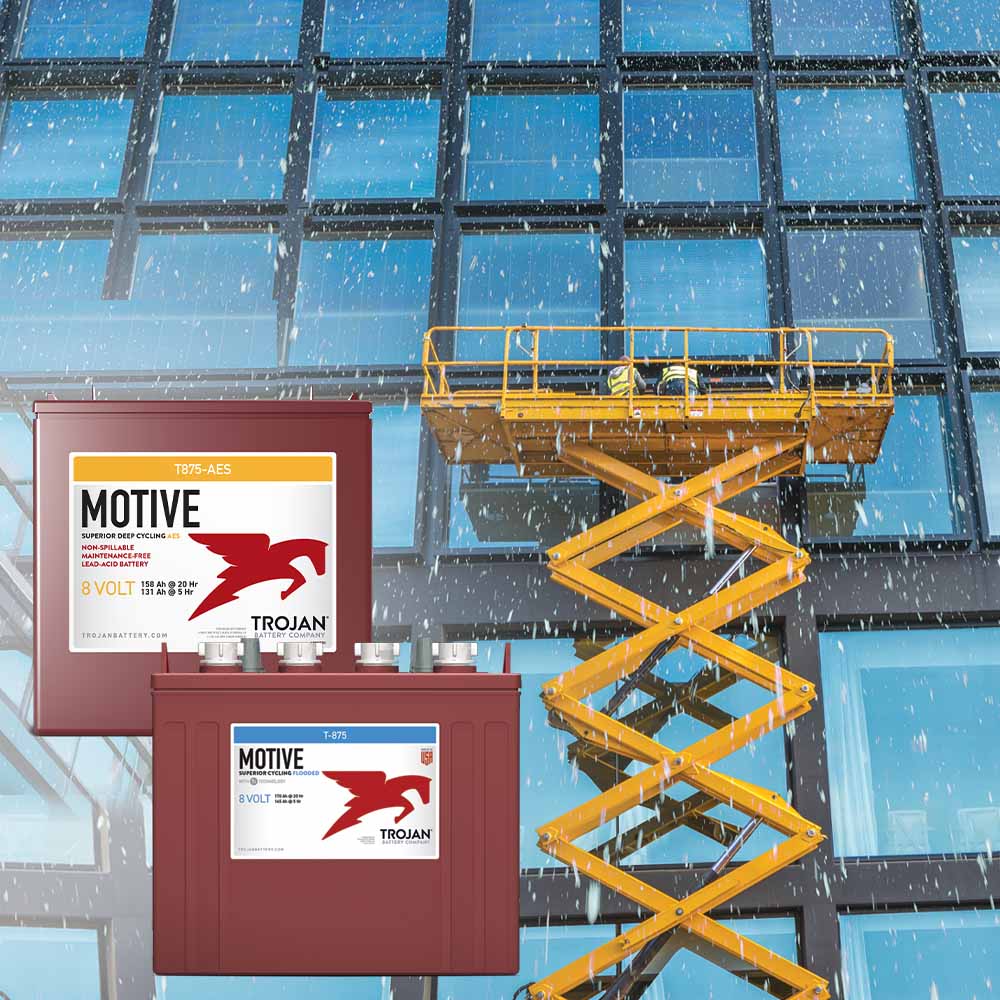
Lithium also handles partial-state-of-charge cycling, which is something lead-acid genuinely struggles with. If your lift gets used for 40 minutes, plugged in for 20, used again for an hour, plugged in for 30, lead-acid hates that pattern and it shortens the battery’s life. LiFePO4 doesn’t care.
Lithium Batteries for Floor Cleaning Machines
Anyone running scrubbers, sweepers, and floor machines in malls, airports, hospitals, or large warehouses knows that downtime is the enemy. The cleaning window is usually fixed, the machine needs to be ready when it’s needed, and a battery that quits halfway through the floor isn’t just an inconvenience, it’s a problem.
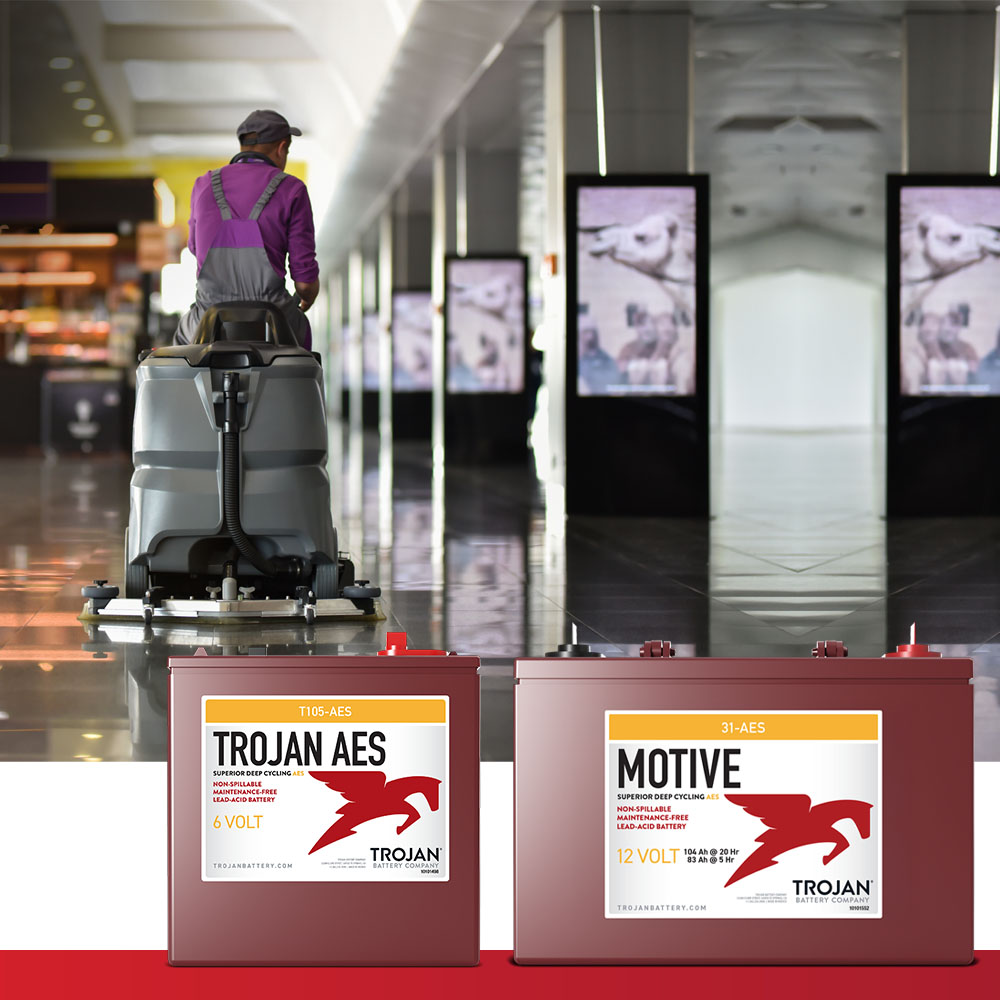
Lithium for floor machines changes this in two ways. First, opportunity charging is genuinely useful. Your operator takes a coffee break, plugs the machine in, and gets 30 to 40 minutes of extra runtime out of the deal. Second, the consistent power means the brushes and vacuum are working at full strength even at the end of a long shift. The floor actually gets cleaner.
Lithium Batteries for Material Handling and Forklifts
Warehouses are the toughest test for any battery, and lithium-ion passes with room to spare. Three-shift operations no longer need the battery swap routine, where every shift change involves rolling out an exhausted battery and rolling in a freshly charged one. With lithium forklift batteries, you opportunity-charge during breaks and lunches and keep the machine moving.
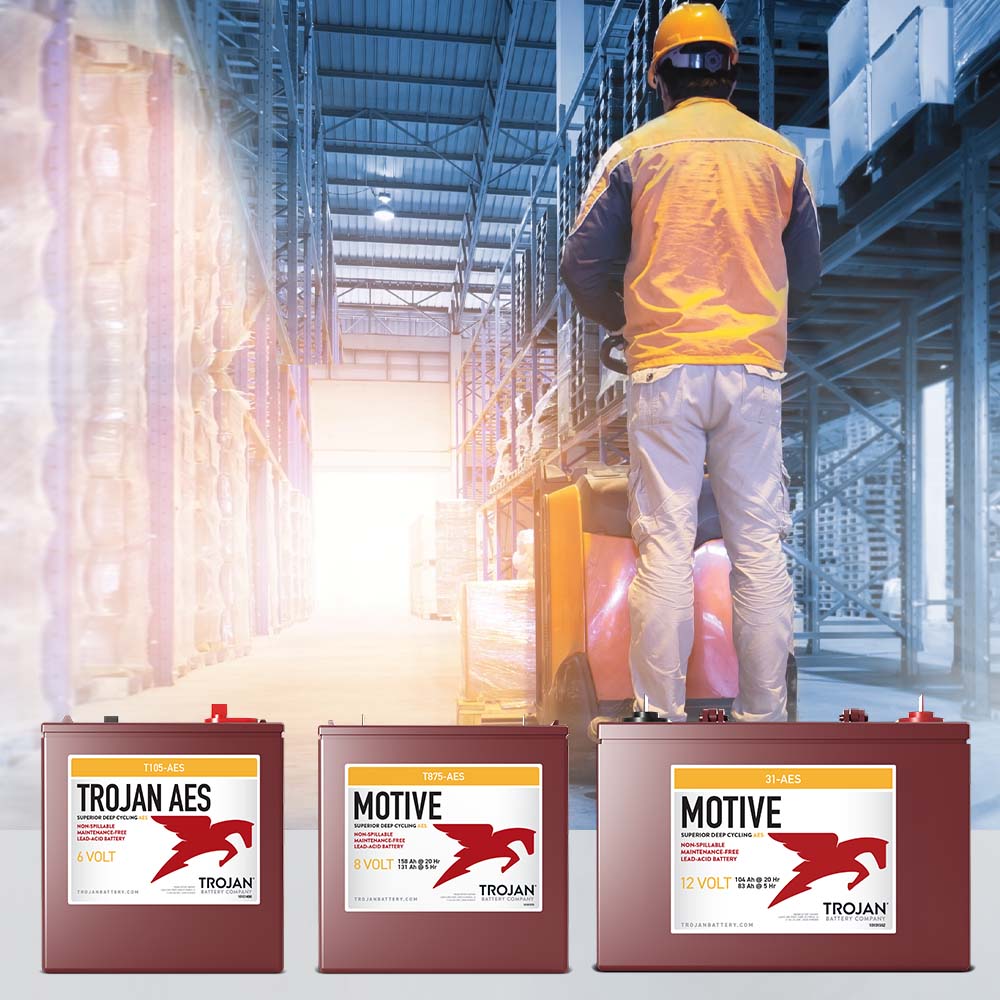
You also get to reclaim the battery room. That’s often a 200 to 400 square foot space with ventilation, watering stations, and concrete floors that’s now doing nothing. Lithium charges anywhere there’s a power outlet.
Lithium vs Lead-Acid: Let’s Talk About the Money
Lithium-ion batteries cost more upfront. We’re not going to pretend otherwise. A lithium pack typically costs two to three times what a comparable lead-acid bank costs at the time of purchase.
But this is where most people stop calculating, and it’s exactly the wrong place to stop.
When you factor in the longer life (one lithium pack outlives three to four lead-acid sets), the eliminated maintenance labour, the energy savings from higher charging efficiency, the productivity gains from faster charging, and the reduced downtime, lithium typically pays for itself within two to three years. Everything after that is pure savings.
For a serious fleet operator, the total cost of ownership (TCO) savings are usually substantial. We’ve had clients who saved enough on a single golf cart fleet conversion to pay for a second one within five years.
Quick Comparison: Lithium-Ion vs Lead-Acid Batteries
| Feature | LiFePO4 Lithium | Flooded Lead-Acid |
| Cycle Life | Up to 4,000 cycles | 500 to 1,200 cycles |
| Charge Time | 2 to 3 hours | 6 to 8 hours |
| Maintenance | None | Regular watering |
| Weight | 40 to 60% lighter | Heavy |
| Usable Capacity | 95 to 100% | 50 to 60% |
| Service Life | 8 to 10 years | 2 to 4 years |
| Charging Efficiency | 95 to 99% | 70 to 85% |
A Few Things to Watch Out For Before You Buy a Lithium Battery
Lithium isn’t magic, and there are a few things worth knowing before you make the jump.
The charger matters. You can’t use a lead-acid charger on a lithium pack and expect good things. Lithium needs a charger that speaks its language, and most quality lithium packs either come with a matched charger or specify exactly what you need. Don’t try to save a few thousand rupees here. It’s the worst place to cut corners.
Quality varies wildly. The lithium battery market in India has exploded, and there are now plenty of cheap imports of questionable origin. Some of them are fine. Many of them aren’t. The horror stories you occasionally hear about lithium fires almost always trace back to poor quality cells, bad BMS design, or counterfeit products. Stick to established brands like Trojan and Marxon with real warranties and real support.
Cold weather affects charging. LiFePO4 is generally excellent across a wide temperature range, but charging at freezing temperatures requires either a heated battery or some patience. For most Indian locations this is a non-issue, but worth knowing if you’re operating in higher altitudes or northern states in winter.
Disposal still matters. Lithium is more recyclable than lead-acid in many ways, but you still need to dispose of old packs responsibly. We help our customers with this.
How IPI India Can Help You Switch to Lithium
We’ve been doing this long enough to know that the right battery is the one that actually fits your specific operation. The golf cart fleet at a 27-hole course in Pune has different needs than the forklift fleet at a Hyderabad warehouse, which has different needs again from the scissor lifts at a Mumbai construction rental yard.
That’s the conversation we’d rather have than just selling you a pack from a catalogue.
We’re authorized partners for Trojan Battery and Marxon, which are two of the most respected names in the industry. Our service network covers Chennai, Bengaluru, Mumbai, Delhi, Hyderabad, Pune, Ahmedabad, Kolkata, Coimbatore, Goa, and Vijayawada. If something needs attention, we’re not far.
If you’re thinking about lithium battery solutions, or even just trying to figure out whether it makes sense for your operation, give us a call. We’ll be honest with you about whether it’s the right time, the right fit, and the right investment. Sometimes the answer is yes immediately. Sometimes it’s wait a year. Either way, you’ll get a straight answer.
Talk to Our Battery Experts Today
Irrigation Products International (Pvt) Ltd.
4/112, East Coast Road, Neelankarai, Chennai 600 115
Contact: Mr. Balasundram +91 93451 68408
Email: info@ipi-india.com | battery@ipi-india.com
Web: www.battery.ipi-india.com
.
.